Combustion inspection in Switzerland: LRV limits for chimney sweeps
In Switzerland, the flue gas loss limit does not follow the output but the burner stage and the commissioning date. What the Ordinance on Air Pollution Control sets for oil and gas, how often installations are checked and how Kehrwerk applies the Swiss rules.
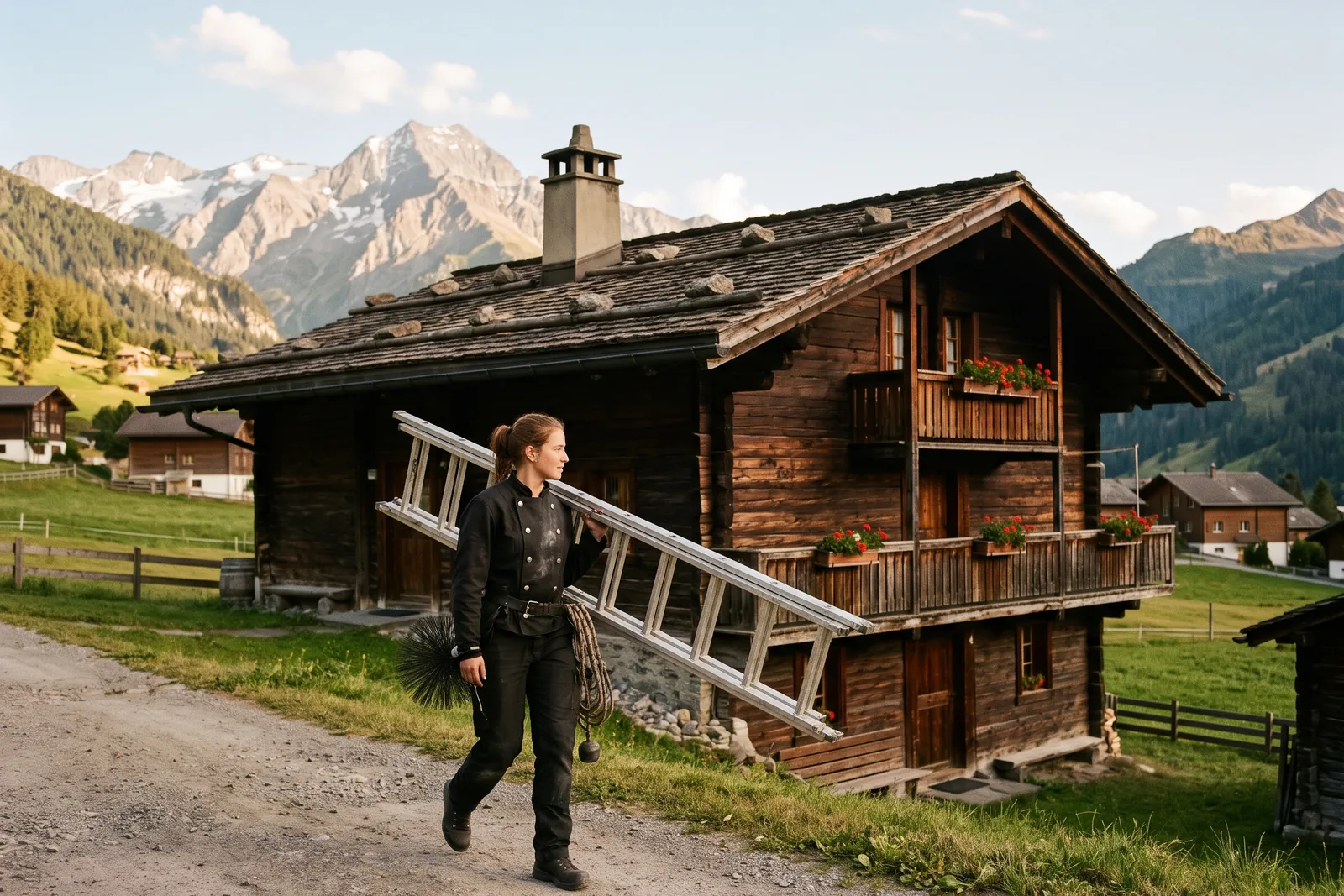
For the Swiss chimney sweep (Kaminfeger) and combustion inspector, the Feuerungskontrolle is governed by the LRV, the federal Ordinance on Air Pollution Control. It differs from the German and Austrian rules in one basic point: the flue gas loss limit does not depend on rated output, but on how the burner runs and when the boiler was commissioned. On top of that, nitrogen oxides are limited on every oil and gas installation in Switzerland. This article sums up what Annex 3 of the LRV sets for oil and gas firing, and how Kehrwerk checks those rules on site.
The source is the LRV (SR 814.318.142.1) in its consolidated version on fedlex.admin.ch. The only binding text is the ordinance and the cantonal practice that enforces it.
Kehrwerk checks under the LRV
Set the country to Switzerland, pick the burner stage, measure. Free forever for one person.


Flue gas loss: stage, not output
For boilers on extra light heating oil, Annex 3 No. 414 (1) sets the flue gas losses that must not be exceeded. The same rule for gas firing is in No. 63:
- Forced draught burners in single-stage operation: 7 percent. For oil this also covers vaporising burners, for gas atmospheric burners.
- Forced draught burners in two-stage operation, first stage: 6 percent
- Forced draught burners in two-stage operation, second stage: 8 percent
Paragraph 1bis sets a stricter limit for newer boilers: boilers for space heating or water heating commissioned from 1 January 2019 must not exceed 4 percent flue gas loss. For the chimney sweep, that means the limit cannot be determined without the commissioning date.
Emission limits for extra light heating oil
Annex 3 No. 411 (1) limits the emissions of firing on extra light heating oil. The limits for gaseous pollutants refer to 3 percent oxygen in the flue gas:
- Smoke number: 1
- Carbon monoxide: 80 mg/m³
- Nitrogen oxides as NO2: 120 mg/m³ for other installations, 150 mg/m³ with a heating medium above 110 degrees, 200 mg/m³ for radiant heaters
The smoke number is read on a reference scale with ten steps from 0 to 9, as defined in Annex 1 of the LRV.
Emission limits for gas
For gas firing, Annex 3 No. 61 (1) sets, again at 3 percent oxygen:
- Carbon monoxide: 100 mg/m³
- Nitrogen oxides as NO2: 80 mg/m³ for other installations, 110 mg/m³ with a heating medium above 110 degrees, 200 mg/m³ for radiant heaters
Flue gas loss, CO and NOx in one pass
Kehrwerk shows every Swiss limit as you type. Download it, no account, no signal needed.
How often installations are checked
Under Article 13 (2) LRV, the first measurement or check should take place within three months of commissioning if possible, and within twelve months at the latest. After that, Article 13 (3) sets the usual repeat interval:
- every four years for gas firing up to 1 MW and for boilers for certain wood fuels up to 70 kW,
- every two years for other firing installations.
Annex 3 No. 22 exempts some installations from periodic measurement, for example those running fewer than 100 hours a calendar year, installations up to 12 kW heating single rooms only, and room heaters burning only certain wood fuels. Under Article 14 (4), the measured values, methods and operating conditions are recorded in a measurement report.
Wood firing and room heaters
For wood firing, Annex 3 No. 524 sets its own rules on measurement and checks. For boilers up to 70 kW burning certain wood fuels, particulate emissions need not be measured during the periodic combustion inspection. For room heaters that are not measured periodically under No. 22 letter f, the authority checks combustion residues and the condition of the installation in particular. On the first visit it also explains proper operation and the use and storage of fuels. In Kehrwerk, a photo of the wood store or the ash pan belongs straight to the measurement.
How Kehrwerk checks the Swiss rules
Set Switzerland as the country in Kehrwerk and every new site inherits it. For oil and gas appliances the app then asks for the details that decide the limit:
- the burner stage: single stage, first stage or second stage,
- the commissioning date, because the 4 percent applies from 1 January 2019,
- for oil, the type of burner.
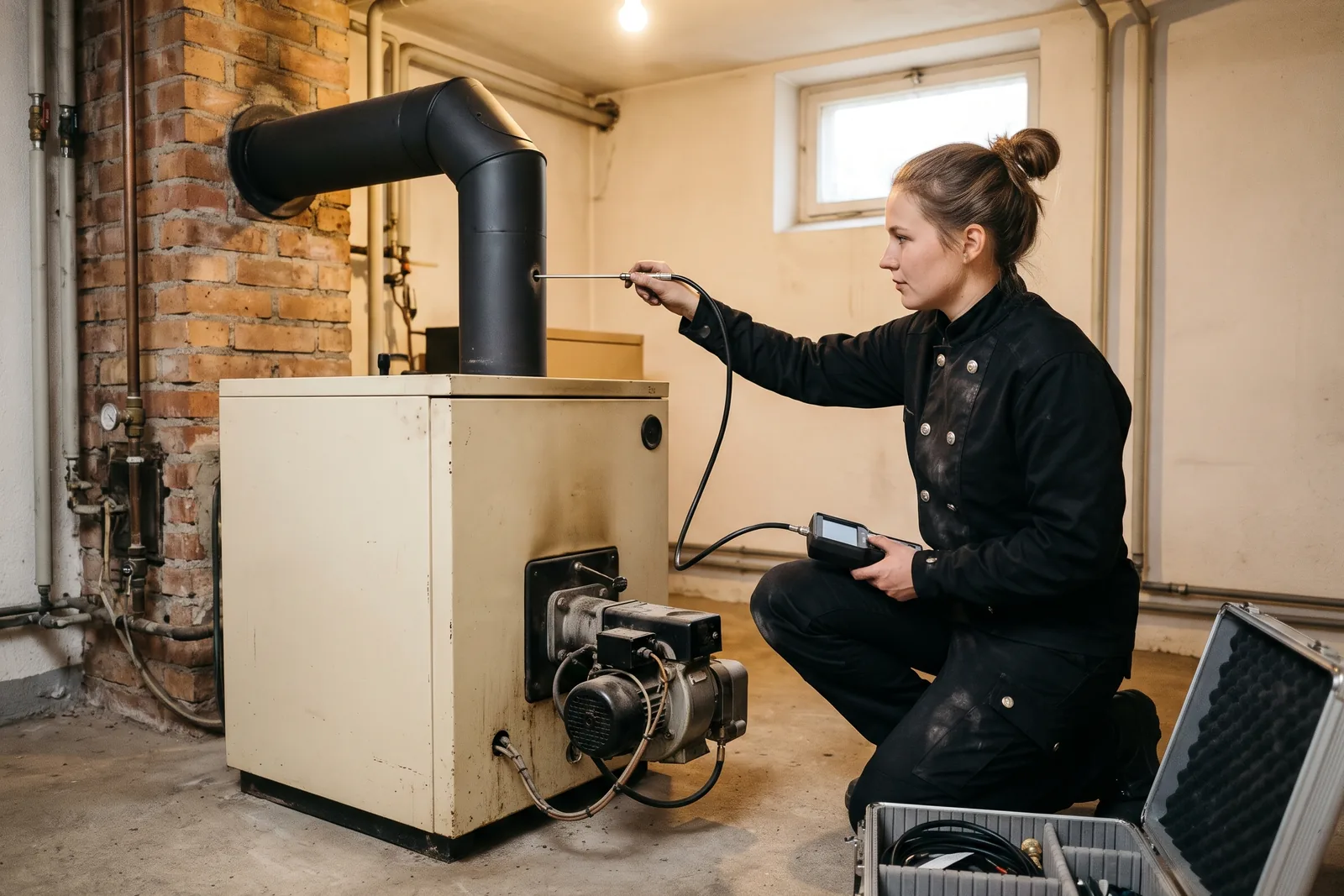
The measurement follows the Swiss values: combustion air temperature, flue gas temperature, oxygen, carbon monoxide, nitrogen oxides and flue gas loss, and for oil the three smoke numbers with their mean. As you type, Kehrwerk shows under each assessed field whether the limit is met, together with the 3 percent reference oxygen. A boiler from 2019 is checked against 4 percent, whatever stage is set.
For wood firing in Switzerland, Kehrwerk asks for flue gas temperature, oxygen, particulates and CO, referenced to 13 percent oxygen, and distinguishes automatic from hand-fed boilers.
Protocol and export
The Kehrwerk PDF names LRV Annex 3 as the legal basis, the reference oxygen and, for every assessed value, the limit with met or exceeded. It is your internal measurement protocol with photos and signature; you issue the combustion report as usual. The CSV export has separate columns for the assessment country, legal basis and reference oxygen.
In Switzerland too, every entry is saved as you type, the measurement stays on the phone, and nothing is lost in a farmhouse cellar with no signal.
Download it now and use it on your next inspection
Free forever for one person. Businesses with several staff try the office free for 14 days.
Which flue gas loss applies to a new oil boiler in Switzerland?
For boilers for space or water heating commissioned from 1 January 2019, 4 percent under LRV Annex 3 No. 414 (1bis).
Why does the limit depend on the burner stage?
That is how the LRV sets it: single stage 7 percent, first stage 6 percent, second stage 8 percent. Rated output plays no part.
Which NOx limits apply to gas firing?
Under Annex 3 No. 61, 80 mg/m³ for other installations and 110 mg/m³ with a heating medium above 110 degrees, each at 3 percent oxygen.
How often is a gas heating system checked?
For gas firing up to 1 MW, usually every four years under Article 13 (3) LRV. Other firing installations every two years.
How do I switch Kehrwerk to Switzerland?
Set the country to Switzerland in the business settings. New sites inherit it, and single sites can be set differently.
Try Kehrwerk on your next reading.
The chimney sweep app for flue gas readings on site. Free forever for one person, no signup.